Environmental Scientists Need to Start Thinking Like Walkers, Rather than Talkers
Environmental scientists need to start thinking more like policymakers. Researchers need to do more than just prove the problem. For real change to happen, the socio-ecological benefits that can result from proposed solutions need to be demonstrated.
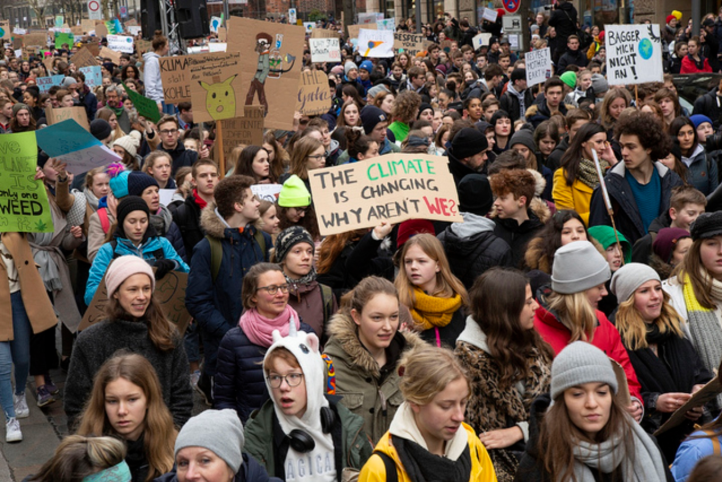
It isn’t enough to show that the average global temperature will increase by 2 degrees C. It isn’t enough to warn that sea levels will rise to a point of catastrophe, that ice caps are already melting, that weather events are already more extreme than they once were. It isn’t enough to tell the United Nations that they aren’t doing enough, we thank you, Greta Thunberg, for your bravery and your willingness to say what needs to be said….but, Greta is only 16 years old. For those of us that have the years of experience, professional connections, and titles that make us “credible”, it isn’t enough just to say what needs to be said.
We have the environmental advocates and we have the science. We have the ethos and the pathos. We even have the logos, but it is often not presented in a way that allows decision-makers to create logical policies. We can’t just say, shut down the fossil fuel and coal power plants and crank up the solar. What would happen to the utility sector? What would be the environmental damages that result from increasing the production of solar panels, wind farms? It isn’t just about the need for better storage and more efficient solar panels. There is a complex social system that is already in place and that system allows us to live the way we do.
Work Smart and Hard.
We cannot ignore the reality that we are at a point where we have to ask other people to change their behavior. “Change my behavior? But it is my right as a human being to live the way I am! I’m not breaking the law by taking long showers. I am entitled to freedom of choice.” Yes. We have established, many years ago, what we are entitled to. So we have to ask and not force change. We do not live in a system that always allows us to force change. Even if we do enforce change, we cannot always guarantee that everyone will obey the law.
We live in a world that is run by the economy. Although we would not exist without the environment, the economy rules the decisions we make in our day to day lives, whether you like it or not. The economy organizes our society in such a way that allows us to live. As I’ve written before, we no longer live in a world where the name of the game is “Survival of the Fittest”. The game has evolved to become “Survival of the Richest”.
So what can we do?! If it is so difficult to convince everyone to start caring more about the environment, how are we going to save the world?
Environmental scientists need to learn to listen to the needs of decision-makers. They need to learn how to summarize and display their ideas in such a way that someone from any educational background could at least attempt to grasp. They need to define the terms they use, clearly. They need to conduct the research efficiently, to kill two or more birds with one stone. They need to search for the connections between problems and open themselves up for discussion with experts from other disciplines.
Most importantly, environmental scientists need to find the best possible solution from BOTH the social perspective and the ecological perspective. There is no escaping pros and cons, costs and benefits. However, maybe there is an acceptable middle ground and if there is, your research better demonstrate that so when you present your findings to a council, they will have no choice but to choose the direction that is better for the environment. Daunting, I know.
Questions to Ask Yourself
Why is it that the research you are doing is useful? How can your findings help us find solutions to the problem? Is there a relationship between the problem you have discovered and other environmental problems? What is the root cause of the problem? Is it feasible to solve this problem by taking extreme measures? Is it necessary to take extreme measures?
 The Science of Working Together